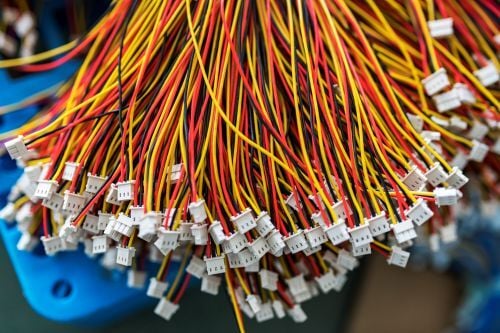

Precision and performance in custom cable assemblies

A custom cable assembly is normally required when a standard cable does not meet the electrical, mechanical or installation needs of the application. The requirement may involve a particular cable length, connector, pin configuration, termination method, level of protection, identification system or test procedure.

Connect‑2 Technology manufactures cable assemblies with soldered, screw and crimped terminations. Our capabilities include:

    • Multipole cable assemblies
    • Industrial power and control cables
    • Data, network and communications cable assemblies
    • IP-rated cable assemblies
    • Heavy-duty power cables
    • Cable assemblies for hazardous-area requirements
    • Prototype, low-volume and repeat production requirements

The exact construction is determined by the application rather than by a fixed product range. This allows cable type, connectors, terminals, protection, labelling and testing to be specified around the equipment in which the assembly will be used.

Cable Assembly contract manufacturing
Cable assemblies for power distribution

Designed around the finished product

A cable assembly cannot be considered in isolation from the product around it. Before manufacture begins, the specification may need to take account of:

    • Current, voltage and signal requirements
    • Cable and conductor type
    • Connector and terminal selection
    • Pin configuration and polarity
    • Finished length and permitted tolerances
    • Space, routing and installation constraints
    • Flexing, vibration or mechanical strain
    • Temperature, moisture or environmental exposure
    • Strain relief, sleeving, shielding or sealing
    • Identification, labelling and packaging
    • Inspection and electrical testing requirements

Reviewing these details early helps identify practical manufacturing issues before materials are ordered or production begins. It can also highlight where a drawing needs clarification, where special tooling may be required or where the proposed construction could be made easier to reproduce.
How cable assembly quality affects product reliability

Cable assemblies create the electrical connection between components such as power supplies, controls, sensors, circuit boards, motors and communications equipment. Their construction can therefore influence the reliability of the complete product.

An incorrect component, damaged conductor, poorly formed crimp, inadequate solder joint, incorrect pin-out or insufficient strain relief can lead to intermittent faults, signal loss, installation difficulties or premature failure. Where equipment is expected to operate continuously or forms part of a safety, monitoring or control system, a relatively small connection fault can affect the performance of the wider product.

Reliable cable assembly manufacture therefore depends on more than checking the finished cable. It begins with an accurate specification and continues through material control, correct tooling, trained operators, documented processes, inspection and testing.

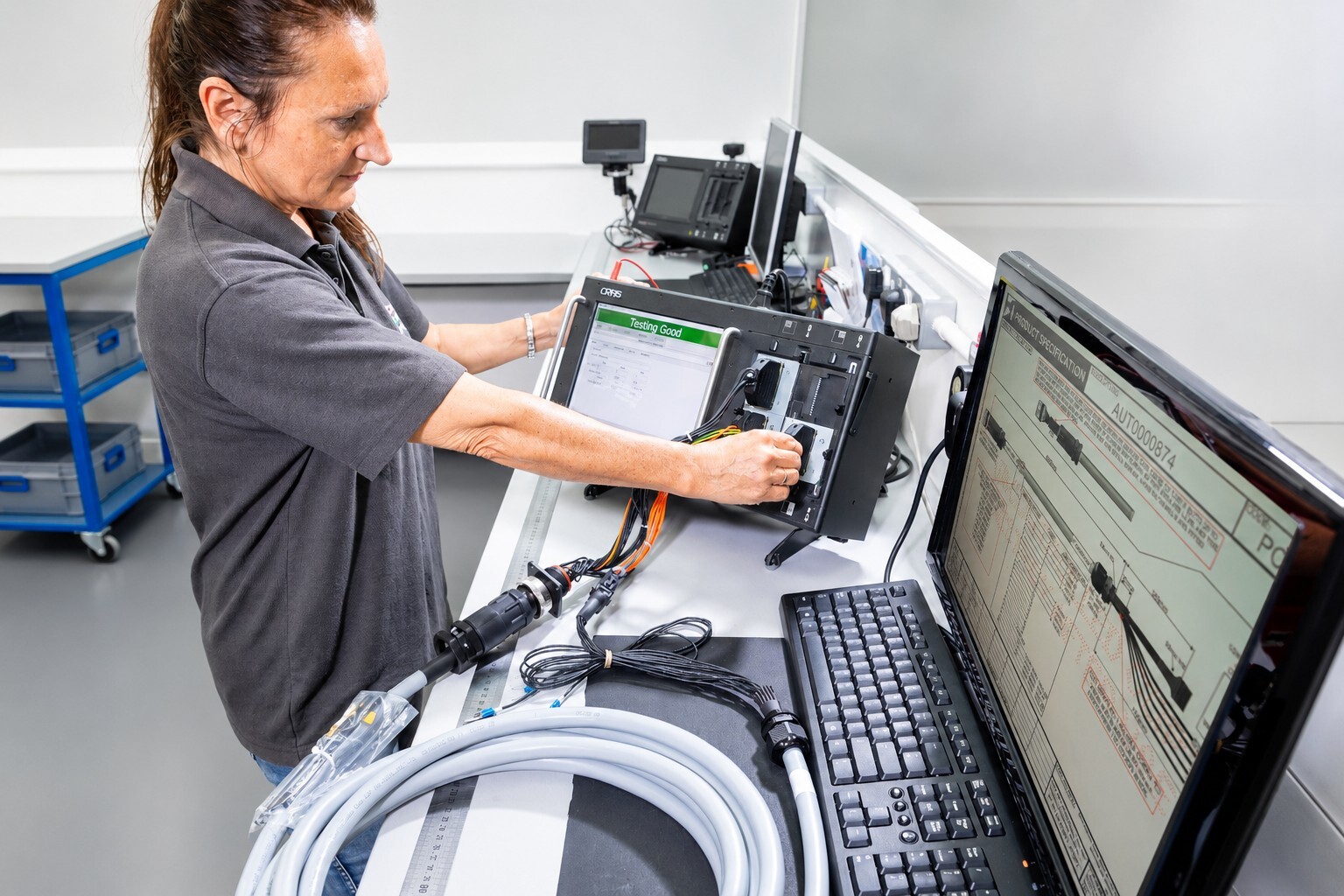
Cable assembly testing and inspection

Controlled manufacturing, inspection and testing

Connect‑2 Technology operates an ISO 9001:2015-certified quality management system and has an IPC/WHMA-A-620-trained workforce.

Materials and components are handled through controlled processes, with inspection carried out during manufacture and at the final stage. Testing is matched to the agreed specification and can include continuity testing, insulation resistance testing and functional testing. Where a standard testing method is not sufficient, customer-specific test processes can also be developed.

Requirements such as component traceability, inspection records, identification and project-specific acceptance criteria should be established before production. This allows the appropriate checks to be incorporated into the manufacturing process rather than added as an afterthought.
Cable Assembly Engineering Support

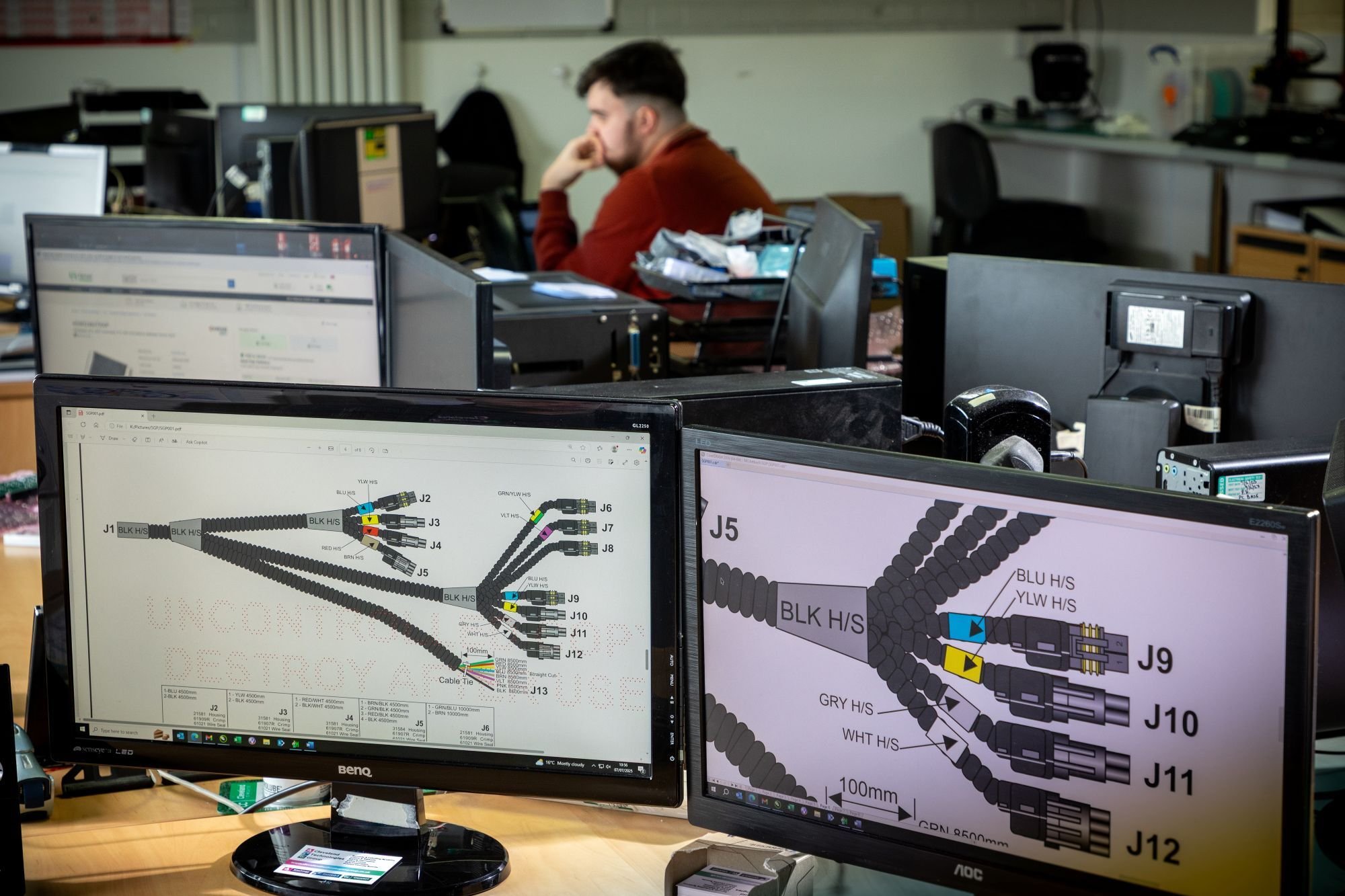
Engineering support from prototype to production

Some customers come to us with a complete, approved manufacturing drawing. Others have a sample, an early-stage design or a requirement that still needs to be developed into a production-ready assembly.

Our in-house engineering team can support:

    • Design for Manufacture reviews
    • Prototype and development builds
    • Technical drawing refinement
    • Build-to-print manufacturing
    • Production process development
    • Tooling and testing requirements
    • Production optimisation

At the prototype stage, we can review how the assembly will be manufactured, fitted and tested. Once the design has been approved, controlled build information and inspection criteria support the move into repeat production.

This approach can be applied to a single development assembly, a low-volume specialist product or an ongoing production requirement. The scale of the customer is less important than having a clearly defined technical, quality and delivery requirement that both parties can plan around.
Keeping complex cable assembly projects on schedule

Custom cable assembly projects rarely slip for one reason alone. Delays can arise when specialist connectors or cable types have long lead times, design changes are introduced after components have been ordered, technical information is incomplete or prototype approval takes longer than expected.

Tooling and testing can also affect the schedule. A project may require a particular crimp applicator, assembly fixture or customer-specific test process that needs to be identified and prepared before production can begin.

These risks can be reduced by reviewing the specification, materials, tooling, testing and approval process at the outset. Clear revision control is also important: everyone involved should be working from the same drawing, bill of materials and manufacturing instructions.

Not every supply-chain risk can be removed, but early technical review and realistic production planning help prevent avoidable rework and last-minute surprises.

Cable Assembly Manufacturing - Factory Floor
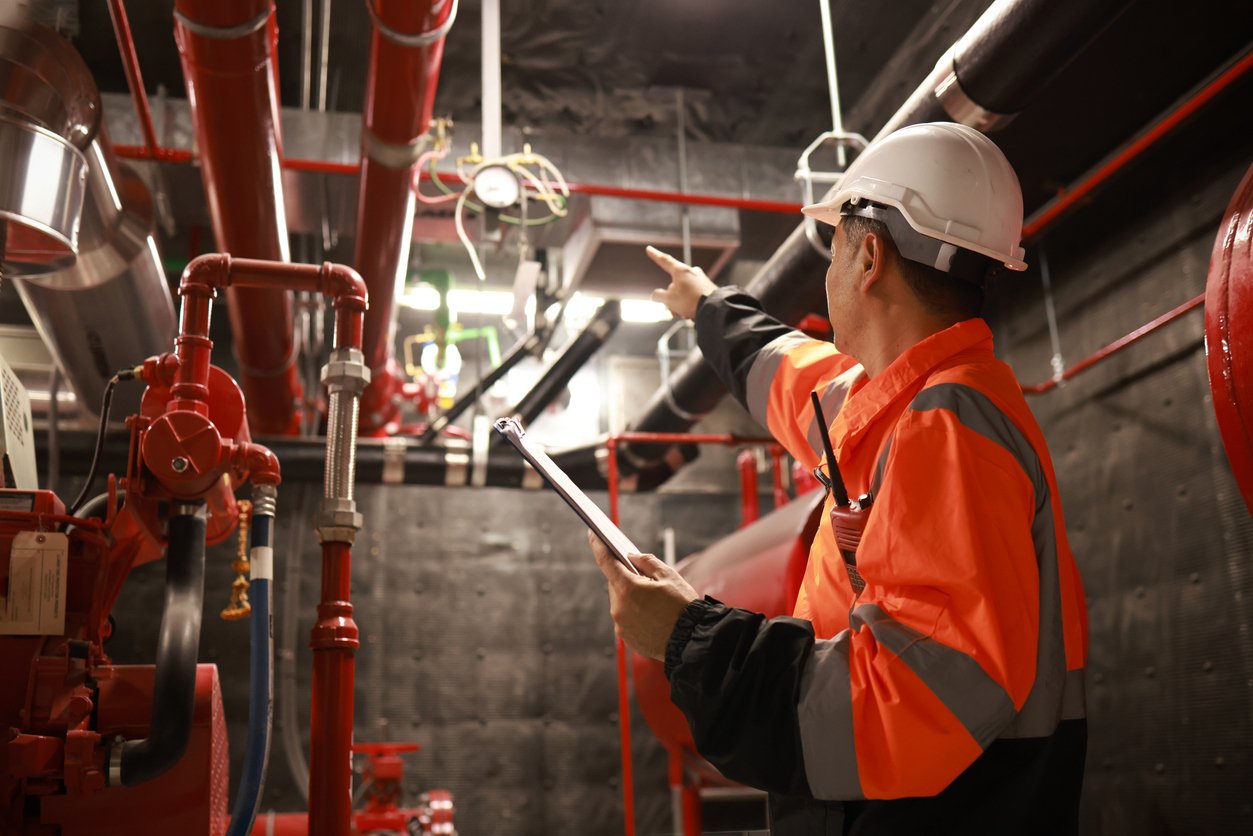
Cable Assemblies for Fire Protection Equipment

Cable assemblies for demanding engineering environments

Connect‑2 Technology supplies cable assemblies for a broad range of technical applications, including safety and fire-protection equipment, renewable energy and power distribution, defence and aerospace systems, scientific and analytical instruments, security equipment and industrial machinery. Connect‑2 is also JOSCAR registered, supporting procurement requirements in defence, aerospace and security supply chains.

There is considerable overlap in the manufacturing requirements across these industries. Safety equipment and renewable energy systems may both depend on robust construction, secure connections and consistent performance over time. Defence projects can involve additional traceability, documentation and procurement controls, while scientific and analytical equipment may require particularly close attention to consistency, tolerances and installation constraints. Each project is therefore reviewed against its own application, operating environment, documentation and testing requirements.
Cleveland Circuits

Wider contract electronics manufacturing support

Customers can purchase custom cable assemblies as a standalone requirement or combine them with Connect‑2 Technology’s wider capabilities, including wiring harnesses, control panels and electronic box build.

As part of Cleveland Technologies Group, we can also coordinate requirements involving bare or assembled printed circuit boards through our sister company, Cleveland Circuits. This can help where cables, wiring, PCBs and box build need to be brought together as part of a wider electronics manufacturing project.

Discuss your cable assembly requirement

To help us assess a requirement accurately, send us your drawing, sample or technical specification together with the expected quantities, testing requirements and delivery schedule.

Our engineering and manufacturing teams can review the information, identify any points that require clarification and discuss the most appropriate route from prototype or first-off assembly through to repeat production.

Got Questions? We’ve Got Answers!

What is a custom cable assembly?

A custom cable assembly is a cable or group of cables prepared with specified connectors, terminals, protection and identification for a particular electrical or electronic function. It is normally used when a standard cable does not meet the required length, pin configuration, connector, operating environment or testing requirements.

How do custom cable assemblies affect product reliability?

Cable assemblies carry power, signals or data between different parts of a product. Incorrect materials, poor terminations, damaged conductors, inadequate strain relief or wiring errors can affect the operation of the wider system. Accurate specifications, controlled manufacturing, inspection and appropriate testing all help reduce these risks.

What commonly causes quality problems in cable assembly manufacturing?

Quality problems are often caused by unclear or conflicting technical information, unsuitable component selection, uncontrolled drawing revisions, incorrect tooling, inconsistent termination processes or inadequate testing. These risks are reduced by agreeing the build specification, materials, inspection criteria and testing requirements before production begins.

What should engineers look for in a cable assembly manufacturer?

A suitable manufacturer should be able to demonstrate controlled quality processes, relevant workforce training, appropriate tooling, inspection and testing capability, engineering support and the capacity to meet the required production volumes. It should also be able to explain how drawings, materials, revisions and test results will be controlled throughout the project.

Can Connect 2 support safety equipment, renewable energy and defence projects?

Yes. Connect‑2 Technology manufactures cable assemblies for safety and fire-protection equipment, renewable energy, power distribution, defence, aerospace, security and other demanding engineering applications. The construction, documentation, traceability and testing requirements are agreed for each individual project. Connect‑2 is also JOSCAR registered for relevant defence, aerospace and security procurement requirements.

Can Connect 2 support both development projects and larger production programmes?

Yes. We support individual prototypes, low-volume development and pre-production builds, as well as repeat and higher-volume manufacturing requirements. Production capacity, component availability, testing and expected schedules are reviewed as part of the quotation and planning process.

Why do custom cable assembly projects sometimes run late?

Common causes include long component lead times, late design changes, incomplete drawings, delayed prototype approval and tooling or test requirements being identified after the project has started. Reviewing the technical and material requirements early helps establish a more realistic production plan and reduces avoidable disruption.

What information is needed to quote a custom cable assembly?

Ideally, provide a drawing or sample together with the cable specification, connector and terminal details, pin configuration, finished lengths and tolerances, expected quantities, testing requirements and required delivery date. Information about the operating environment, identification and packaging can also be important.

What cable assembly testing can Connect 2 provide?

Testing can include visual inspection, continuity testing, insulation resistance testing and functional testing, depending on the customer specification. Where required, Connect‑2 can also develop a project-specific testing process for assemblies that cannot be assessed using a standard test routine.

Can Connect 2 support a wider electronics manufacturing project?

Yes. Alongside cable assemblies, Connect‑2 Technology manufactures wiring harnesses, control panels and electronic box builds. Bare and assembled PCBs can also be supplied through Cleveland Circuits, our sister company within Cleveland Technologies Group.